
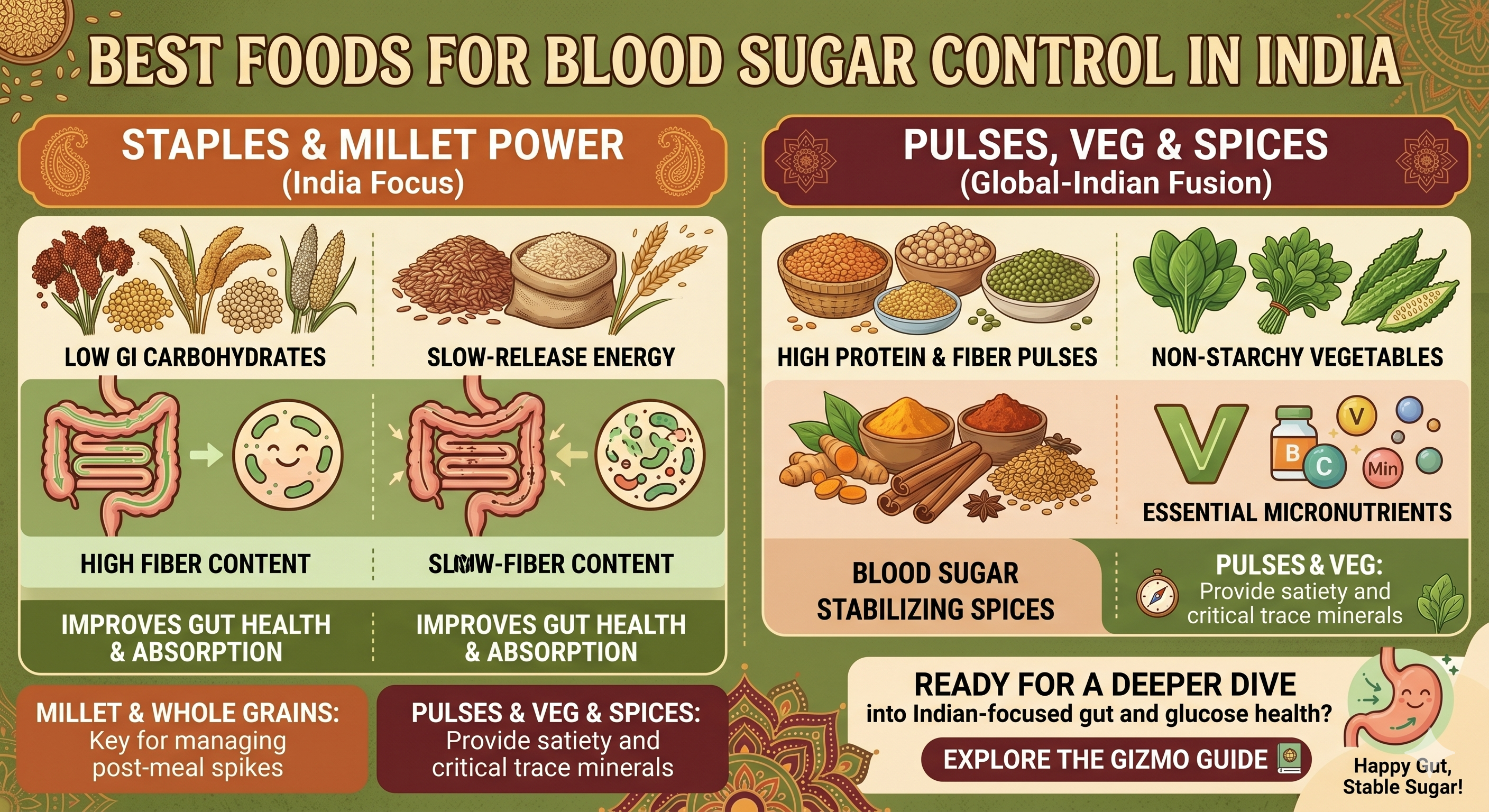
Best Foods for Blood Sugar Control in India
India is now the diabetes capital of the world. Over 100 million Indians live with diabetes, and an estimated 136 million are in the 'pre-diabetic' zone — at risk but not yet diagnosed.
The GRASA Nutrition Team
April 23, 2026
India is now the diabetes capital of the world. Over 100 million Indians live with diabetes, and an estimated 136 million are in the 'pre-diabetic' zone — at risk but not yet diagnosed. The scariest part? Most of them don't know yet.
But here's what the research consistently shows: food is the most powerful tool for managing blood sugar. Not just which foods you eat, but how they're prepared, when you eat them, and how they interact with each other.
This guide focuses specifically on foods that work within the Indian diet and lifestyle — foods that are easy to find, affordable, and backed by evidence.
Why Blood Sugar Control Matters (Even If You're Not Diabetic)
Blood sugar instability affects far more people than those with a diabetes diagnosis. If you experience any of the following, your blood sugar may be fluctuating too much:
- Energy crashes after meals
- Craving sweets 1–2 hours after eating
- Feeling hungry very quickly after a full meal
- Difficulty concentrating in the afternoon
- Weight gain around the belly
- Poor sleep quality
Stabilising blood sugar solves all of these — often within weeks.
The 10 Best Foods for Blood Sugar Control in India
1. Millets (Jowar, Bajra, Ragi, Foxtail)
This is the single most powerful dietary change an Indian can make for blood sugar control. Millets have a low-to-medium glycemic index (50–65 vs. wheat's 70+), are rich in dietary fibre, and contain magnesium — a mineral that improves insulin sensitivity. Ragi in particular is exceptional for managing post-meal glucose spikes.
2. Methi (Fenugreek)
Methi seeds contain soluble fibre and a compound called 4-hydroxyisoleucine, which directly stimulates insulin secretion. Soaking 1 teaspoon of methi seeds overnight and drinking the water in the morning is a proven traditional remedy now backed by clinical studies.
3. Karela (Bitter Gourd)
Karela contains at least three active compounds that act similarly to insulin — helping cells absorb glucose. It's one of the few vegetables with direct anti-diabetic properties. Regular consumption (as juice or cooked vegetable) has been shown to lower HbA1c levels.
4. Amla (Indian Gooseberry)
Amla is extraordinarily rich in Vitamin C and polyphenols that reduce oxidative stress — a key driver of insulin resistance. Studies show that consuming amla daily can significantly reduce fasting blood sugar and improve lipid profiles.
5. Turmeric
Curcumin, the active compound in turmeric, has strong anti-inflammatory properties. Chronic low-grade inflammation is a major driver of Type 2 diabetes. Adding turmeric to meals — especially with black pepper (which enhances absorption) — is one of the simplest things you can do.
6. Cinnamon (Dalchini)
Cinnamon improves insulin sensitivity and slows gastric emptying, which reduces post-meal glucose spikes. Half a teaspoon daily, added to chai, oats, or warm water, can make a measurable difference over time.
7. Legumes (Dal, Rajma, Chana)
All lentils and legumes have a very low glycemic index and are rich in both protein and soluble fibre. They slow digestion, reduce post-meal spikes, and keep you full for longer. Including dal at every meal is one of the most evidence-backed dietary habits for blood sugar control.
8. Leafy Greens (Palak, Methi, Sarson)
Green leafy vegetables are low in carbohydrates and high in magnesium, folate, and antioxidants. They can be eaten in large quantities without affecting blood sugar. The goal should be at least one serving of green leafy vegetables at lunch and dinner.
9. Nuts and Seeds (Almonds, Walnuts, Flaxseeds, Chia)
These foods are rich in healthy fats, protein, and fibre — all of which slow glucose absorption. A small handful of almonds before a meal has been shown to reduce post-meal blood sugar in multiple studies. Flaxseeds are particularly useful as they're cheap, easily available, and can be added to any meal.
10. Fermented Foods (Curd, Idli, Dosa, Kanji)
Fermented foods improve gut microbiome diversity, which is directly linked to better insulin sensitivity. Traditional Indian fermented foods — especially homemade curd — are excellent daily additions. The gut-blood sugar connection is one of the most exciting areas of current medical research.
Foods to Reduce or Avoid
| Food | Why It's Harmful | Better Alternative |
|---|---|---|
| White rice (large portions) | Very high GI, spikes glucose fast | Small portions with dal + vegetable |
| Maida (refined flour) | Stripped of fibre, digests instantly | Millet atta or whole wheat |
| Packaged biscuits & snacks | Hidden sugar + refined carbs | Millet snack bars, roasted chana |
| Sweetened chai (3+ cups) | Constant glucose stimulation | Unsweetened or herbal teas |
| Fruit juices | Sugar without fibre | Whole fruit instead |
| White bread | High GI, low nutrition | Millet or multigrain bread |
The Indian Plate for Blood Sugar Control
A balanced Indian meal for blood sugar management should look like this:
- 50% of the plate: Non-starchy vegetables (sabzi, salad, greens)
- 25% of the plate: Protein (dal, legumes, curd, paneer, eggs, fish)
- 25% of the plate: Complex carbohydrates (millet roti, small portion of rice)
- Fat: Small amounts of ghee or cold-pressed oils (helps slow glucose absorption)
Eating in this proportion — without calorie counting — naturally stabilises blood sugar and supports gradual, sustainable weight loss.
How GRASA Supports Blood Sugar Control
GRASA's food programme is built around the exact principles described in this article. Our millet-based foods — atta, flatbreads, snack bars — are designed to replace the high-GI staples in your diet without asking you to change everything about how you eat. Our nutritionist team works with each person individually. If you have existing blood sugar issues, we track your response and adjust your plan. Many of our members see measurable improvements in fasting glucose within 6–8 weeks.
${diabeticParentsCTA}The Takeaway
Blood sugar control doesn't require medication, extreme diets, or giving up Indian food. It requires understanding which traditional Indian foods already work — and bringing them back to the centre of your plate. Millets, methi, amla, dal, and curd have been part of the Indian diet for thousands of years. They were always the answer. We just forgot.
Found this helpful? Share it with your network.
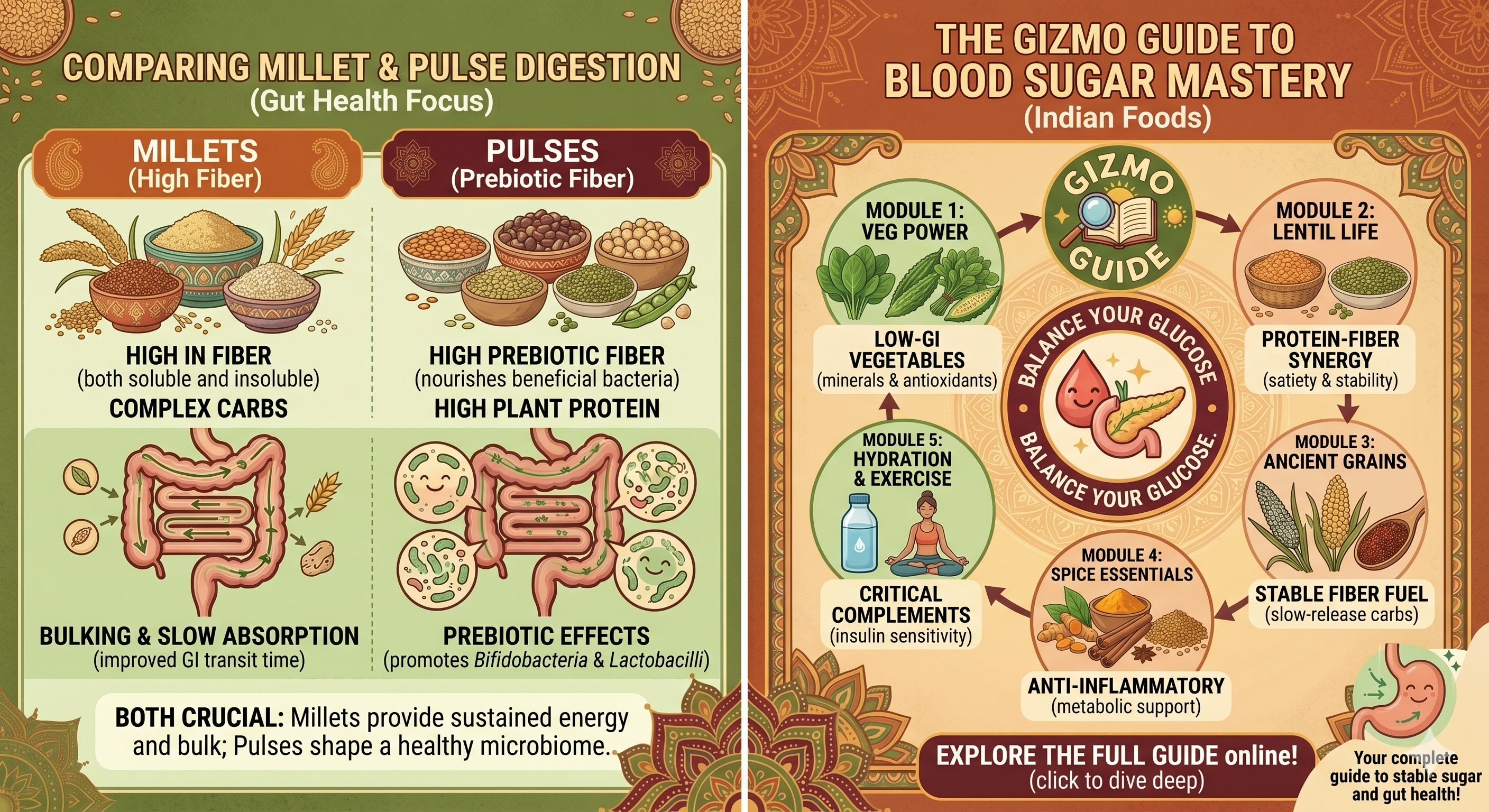
Related Visuals
Share this Article
Explore GRASA
Fermented atta and sourdough bread crafted for gut health and metabolic wellness.
Shop NowOr WhatsApp: +91 9870263399
Explore More Articles
GRASA Recognised as India's Emerging Health Tech & Nutrition Innovation Startup of the Year — Rashtriya Ratna Samman 2026
GRASA Millets & Foods Pvt Ltd — India's first food-led metabolic recovery system built on fermented millets — has been awarded the Emerging Health Tech & Nutrition Innovation Startup of the Year at the Rashtriya Ratna Samman 2026.
Read More →Millets vs Wheat: Which Is Better for Digestion?
If you often feel bloated, sluggish, or heavy after meals, the problem might not be how much you eat — it could be what you eat.
Read More →Jowar vs Bajra vs Ragi: What's the Difference?
Walk into any health store or browse any nutrition website today and you'll see millets everywhere. But 'millets' is actually an umbrella term for a large family of ancient grains...
Read More →THE PCOS-GUT CONNECTION: WHY YOUR HORMONES CANNOT HEAL WITHOUT FIXING THIS FIRST
If you have PCOS and feel like you are doing everything right but nothing is working — your gut microbiome may be why. Here is the science, and what to do about it.
Read More →