
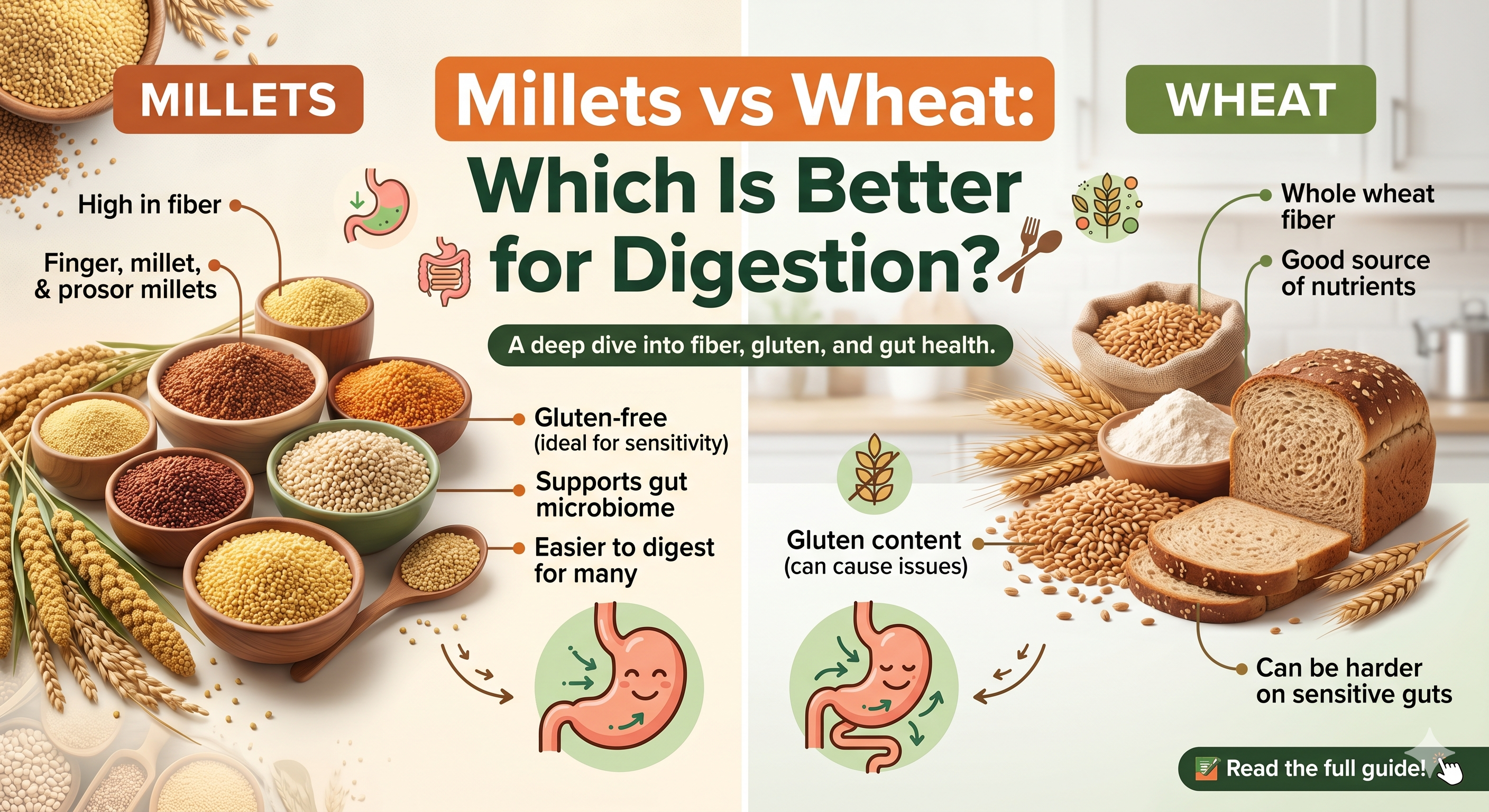
Millets vs Wheat: Which Is Better for Digestion?
If you often feel bloated, sluggish, or heavy after meals, the problem might not be how much you eat — it could be what you eat.
The GRASA Nutrition Team
April 23, 2026
If you often feel bloated, sluggish, or heavy after meals, the problem might not be how much you eat — it could be what you eat.
Wheat has been the backbone of the Indian diet for decades, but millets — the ancient grains our grandparents grew up eating — are making a powerful comeback. And for good reason.
In this article, we break down the key differences between millets and wheat, especially when it comes to digestion, gut health, and how you feel after meals.
What Makes Digestion 'Good' or 'Bad'?
Your digestive system works best when it receives food that it can break down slowly, absorb efficiently, and pass through without inflammation.
Good digestion means:
- No bloating or gas after meals
- Steady energy (no post-lunch crashes)
- Regular bowel movements
- No acid reflux or heaviness
Both millets and wheat affect all of these — but in very different ways.
Wheat and Digestion: The Problem
1. Gluten
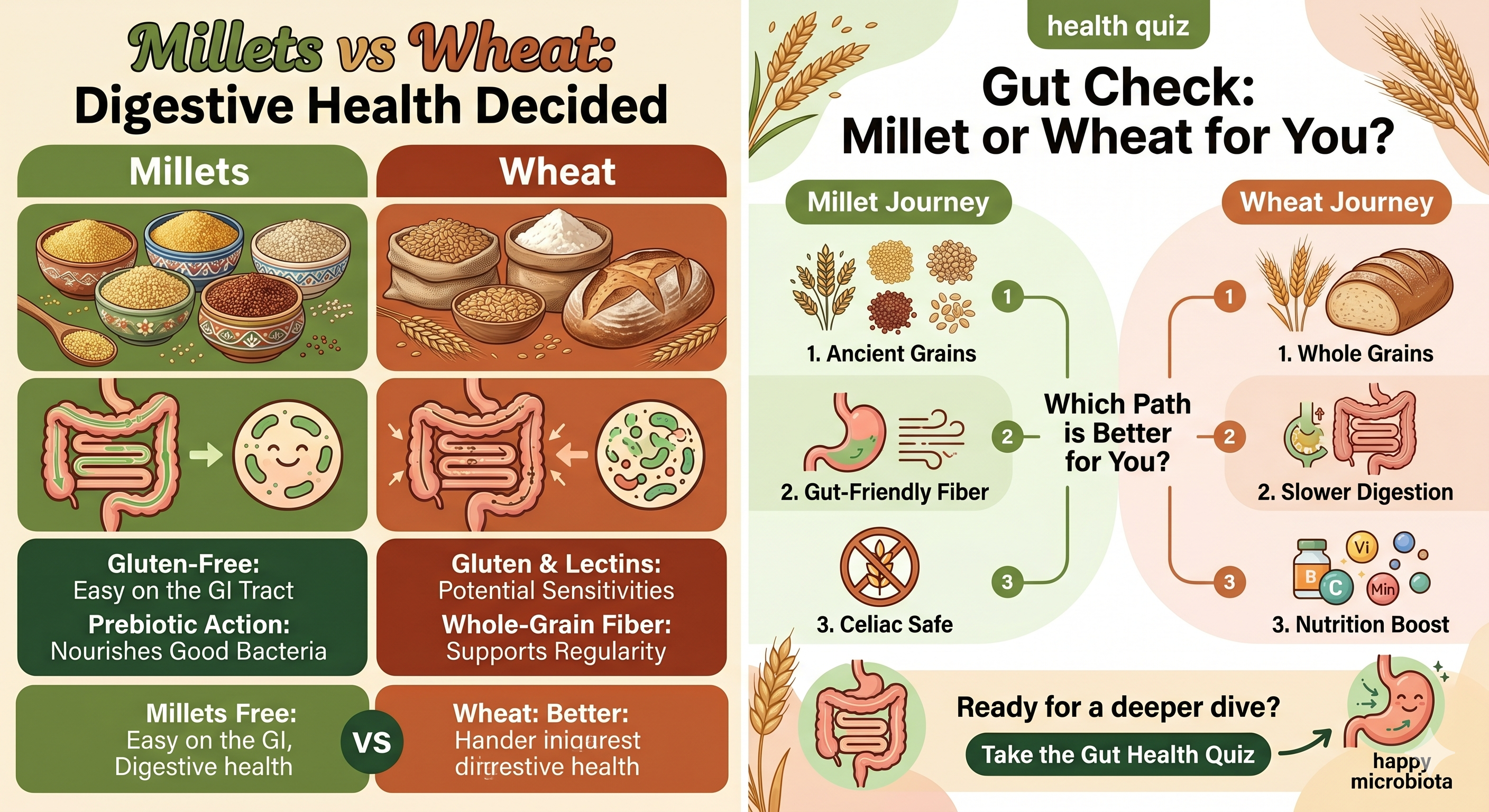
Wheat contains gluten — a protein that many people's digestive systems struggle to process. Even without full celiac disease, a significant number of people experience 'non-celiac gluten sensitivity', which can cause bloating, loose stools, brain fog, and fatigue.
2. High Glycemic Index
Modern wheat flour (maida or even atta from hybrid wheat) has a high glycemic index (GI of 70+). This means it breaks down quickly, causes blood sugar spikes, and triggers an insulin response — leaving you hungry again soon after eating.
3. Phytic Acid
Wheat contains phytic acid, which can bind to minerals like iron, zinc, and magnesium — reducing how much your body actually absorbs from food.
Millets and Digestion: The Advantage
1. Gluten-Free
All millets — jowar, bajra, ragi, foxtail, and others — are naturally gluten-free. This means they are far gentler on the gut lining, especially for people with IBS, acid reflux, or general digestive sensitivity.
2. High Dietary Fibre
Millets are rich in both soluble and insoluble fibre. Soluble fibre feeds good gut bacteria and slows sugar absorption. Insoluble fibre adds bulk to stools and promotes regular bowel movements. Together, they create the ideal environment for a healthy gut microbiome.
3. Low to Medium Glycemic Index
Most millets have a GI between 50–65, compared to wheat's 70+. This means slower digestion, more stable blood sugar, and longer-lasting energy — which is why many people on a millet-based diet report not feeling hungry for hours after eating.
4. Prebiotic Properties
Millets contain compounds that act as prebiotics — they feed beneficial gut bacteria like Lactobacillus and Bifidobacterium. A healthier gut microbiome is directly linked to reduced bloating, better immunity, and even improved mood.
Millets vs Wheat: Head-to-Head Comparison
| Factor | Wheat (Atta) | Millets |
|---|---|---|
| Gluten | Contains gluten | Completely gluten-free |
| Glycemic Index | High (70+) | Low to medium (50–65) |
| Fibre Content | Moderate | High |
| Gut Microbiome | Neutral to negative | Supports good bacteria |
| Blood Sugar Impact | Spikes quickly | Slow, steady release |
| Mineral Absorption | Blocked by phytic acid | Better bioavailability |
| Post-meal Energy | Crash within 2 hours | Sustained energy |
Who Should Switch to Millets?
Millets are especially beneficial for people who:
- Feel bloated or gassy after meals regularly
- Have been diagnosed with IBS, acid reflux, or digestive sensitivity
- Want to manage blood sugar or reduce diabetes risk
- Experience post-meal fatigue or energy crashes
- Are trying to lose weight sustainably
- Have a family history of diabetes or heart disease
How GRASA Makes the Switch Easy
Switching from wheat to millets doesn't mean giving up your rotis or your favourite foods. At GRASA, we prepare ancient Indian grains into everyday foods — atta, flatbreads, snack bars, and more — that look and taste familiar, but work very differently inside your body.
Our nutritionist team personalises your food plan based on your health goals, so you're not just eating healthy — you're eating right for your body.
The Bottom Line
Wheat isn't poison. But for many Indians — especially those with digestive issues, blood sugar concerns, or chronic fatigue — millets offer a meaningfully better alternative. They digest slower, feed your gut better, and give you more stable energy throughout the day.
Your grandparents ate jowar rotis and bajra khichdi for a reason. It's time to go back to what works.
${delhiNcrCTA}Found this helpful? Share it with your network.
Related Visuals
Share this Article
Explore GRASA
Fermented atta and sourdough bread crafted for gut health and metabolic wellness.
Shop NowOr WhatsApp: +91 9870263399
Explore More Articles
GRASA Recognised as India's Emerging Health Tech & Nutrition Innovation Startup of the Year — Rashtriya Ratna Samman 2026
GRASA Millets & Foods Pvt Ltd — India's first food-led metabolic recovery system built on fermented millets — has been awarded the Emerging Health Tech & Nutrition Innovation Startup of the Year at the Rashtriya Ratna Samman 2026.
Read More →Best Foods for Blood Sugar Control in India
India is now the diabetes capital of the world. Over 100 million Indians live with diabetes, and an estimated 136 million are in the 'pre-diabetic' zone — at risk but not yet diagnosed.
Read More →Jowar vs Bajra vs Ragi: What's the Difference?
Walk into any health store or browse any nutrition website today and you'll see millets everywhere. But 'millets' is actually an umbrella term for a large family of ancient grains...
Read More →THE PCOS-GUT CONNECTION: WHY YOUR HORMONES CANNOT HEAL WITHOUT FIXING THIS FIRST
If you have PCOS and feel like you are doing everything right but nothing is working — your gut microbiome may be why. Here is the science, and what to do about it.
Read More →