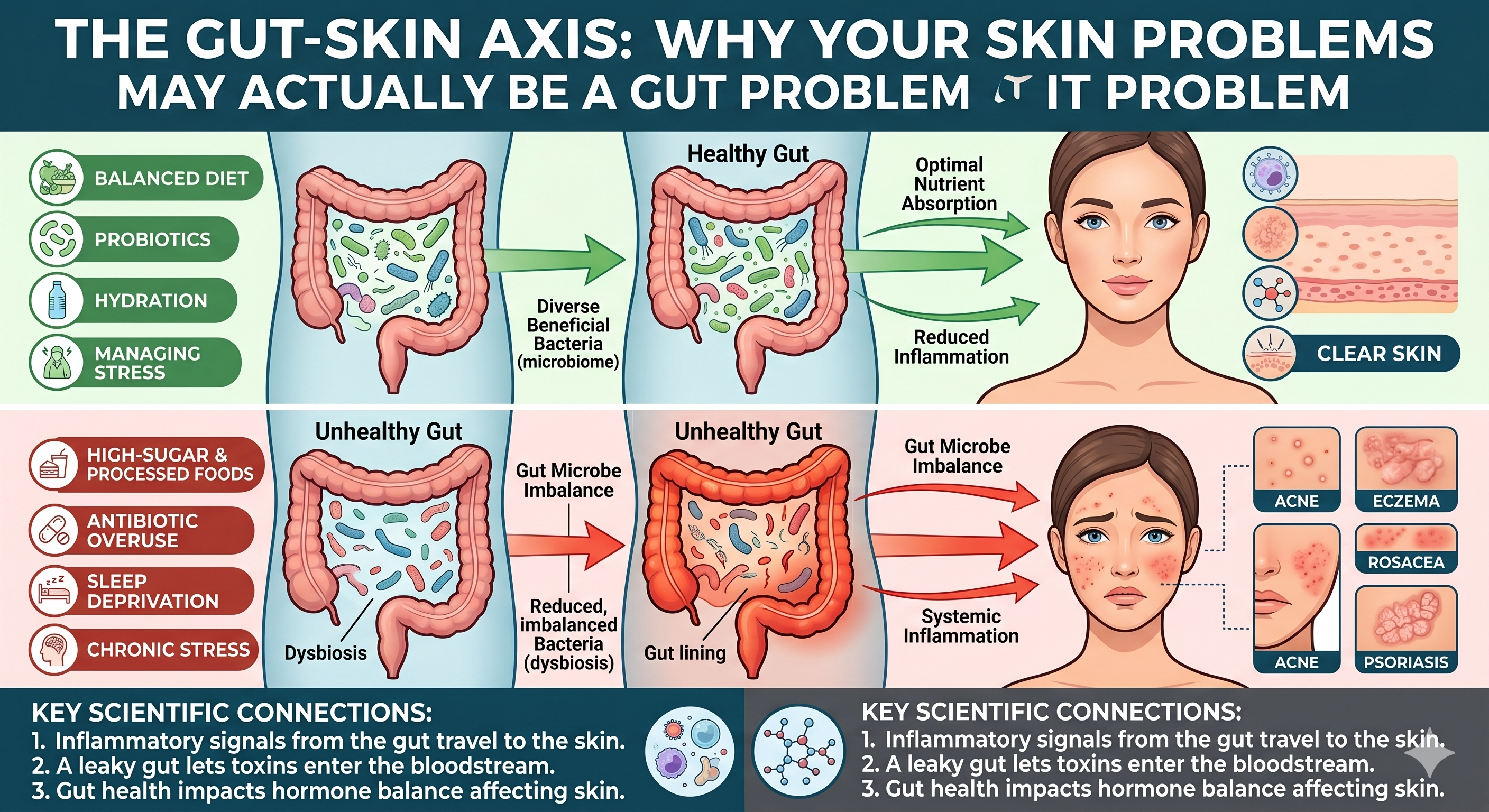
THE GUT-SKIN AXIS: WHY YOUR SKIN PROBLEMS MAY ACTUALLY BE A GUT PROBLEM
Persistent acne, dullness, and eczema in your skincare routine may have their root in your gut microbiome. Here is the science and what to do about it.
GRASA Team
March 17, 2026
If you have spent significant money on skincare — serums, prescription retinoids, dermatologist visits, fancy cleansers — and your skin is still not where you want it to be, there is a question worth asking: have you addressed your gut?
The gut-skin axis is one of the more exciting frontiers in both dermatology and gastroenterology. The research is now clear enough to say with confidence: the state of your gut microbiome is a significant determinant of your skin health — particularly for inflammatory conditions like acne, eczema, and rosacea.
How the Gut and Skin Are Connected
The connection works through several pathways:
The Inflammation Pathway
When gut bacteria are imbalanced — with more inflammatory strains and fewer beneficial ones — the gut lining becomes more permeable. This allows bacterial toxins called lipopolysaccharides (LPS) into the bloodstream. LPS triggers systemic inflammation. That inflammation expresses itself differently in different people — in some it shows up as joint pain, in others as fatigue, and in many as skin inflammation: acne, redness, eczema.
The Hormone Pathway
For women specifically — and particularly those with PCOS — the gut's role in estrogen metabolism directly affects skin. Excess estrogen recirculation (caused by poor gut microbiome health) drives hormonal acne along the jawline and chin. This is why hormonal acne does not fully resolve with topical treatment alone: the root cause is systemic.
The Nutrient Absorption Pathway
Your gut is where nutrients are absorbed. A disrupted gut microbiome means compromised absorption of zinc (critical for wound healing and sebum regulation), Vitamin A (essential for skin cell turnover), and omega-3 fatty acids (anti-inflammatory). Skin that is dull, slow to heal, and prone to congestion may simply be a skin that is under-nourished despite adequate food intake.
What the Research Shows
A 2018 meta-analysis in the Journal of Dermatological Science reviewed 10 studies and found consistent evidence of gut microbiome differences between individuals with acne and those without. The acne group showed lower diversity and specifically lower levels of Lactobacillus and Bifidobacterium.
A 2022 study in Frontiers in Microbiology found that probiotic supplementation (introducing beneficial bacteria) led to significant improvement in acne severity scores over 12 weeks — with the mechanism identified as reduced systemic inflammation and improved skin barrier function.
What This Means Practically
If your skin concerns include acne (particularly hormonal or cystic), persistent dullness, slow healing, or eczema — your skincare routine is addressing the symptom. Gut health addresses the cause.
The practical starting point is the same for every other gut health concern: increase dietary fermented foods, reduce ultra-processed food, and manage the chronic stress that is driving cortisol-induced gut disruption.
For urban NCR residents in their 20s and 30s — facing the combined assault of pollution, stress, processed food, and antibiotic use — the gut microbiome is almost certainly compromised to some degree. The question is not whether your gut needs attention. The question is how you most frictionlessly address it.
GRASA fermented bread and atta — gut health through food you eat every day. Delhi NCR delivery.
Order on grasamillets.com
Found this helpful? Share it with your network.
Related Articles
Share this Article
Explore GRASA
Fermented atta and sourdough bread crafted for gut health and metabolic wellness.
Shop NowOr WhatsApp: +91 9870263399
Explore More Articles
GRASA Recognised as India's Emerging Health Tech & Nutrition Innovation Startup of the Year — Rashtriya Ratna Samman 2026
GRASA Millets & Foods Pvt Ltd — India's first food-led metabolic recovery system built on fermented millets — has been awarded the Emerging Health Tech & Nutrition Innovation Startup of the Year at the Rashtriya Ratna Samman 2026.
Read More →Millets vs Wheat: Which Is Better for Digestion?
If you often feel bloated, sluggish, or heavy after meals, the problem might not be how much you eat — it could be what you eat.
Read More →Best Foods for Blood Sugar Control in India
India is now the diabetes capital of the world. Over 100 million Indians live with diabetes, and an estimated 136 million are in the 'pre-diabetic' zone — at risk but not yet diagnosed.
Read More →Jowar vs Bajra vs Ragi: What's the Difference?
Walk into any health store or browse any nutrition website today and you'll see millets everywhere. But 'millets' is actually an umbrella term for a large family of ancient grains...
Read More →