
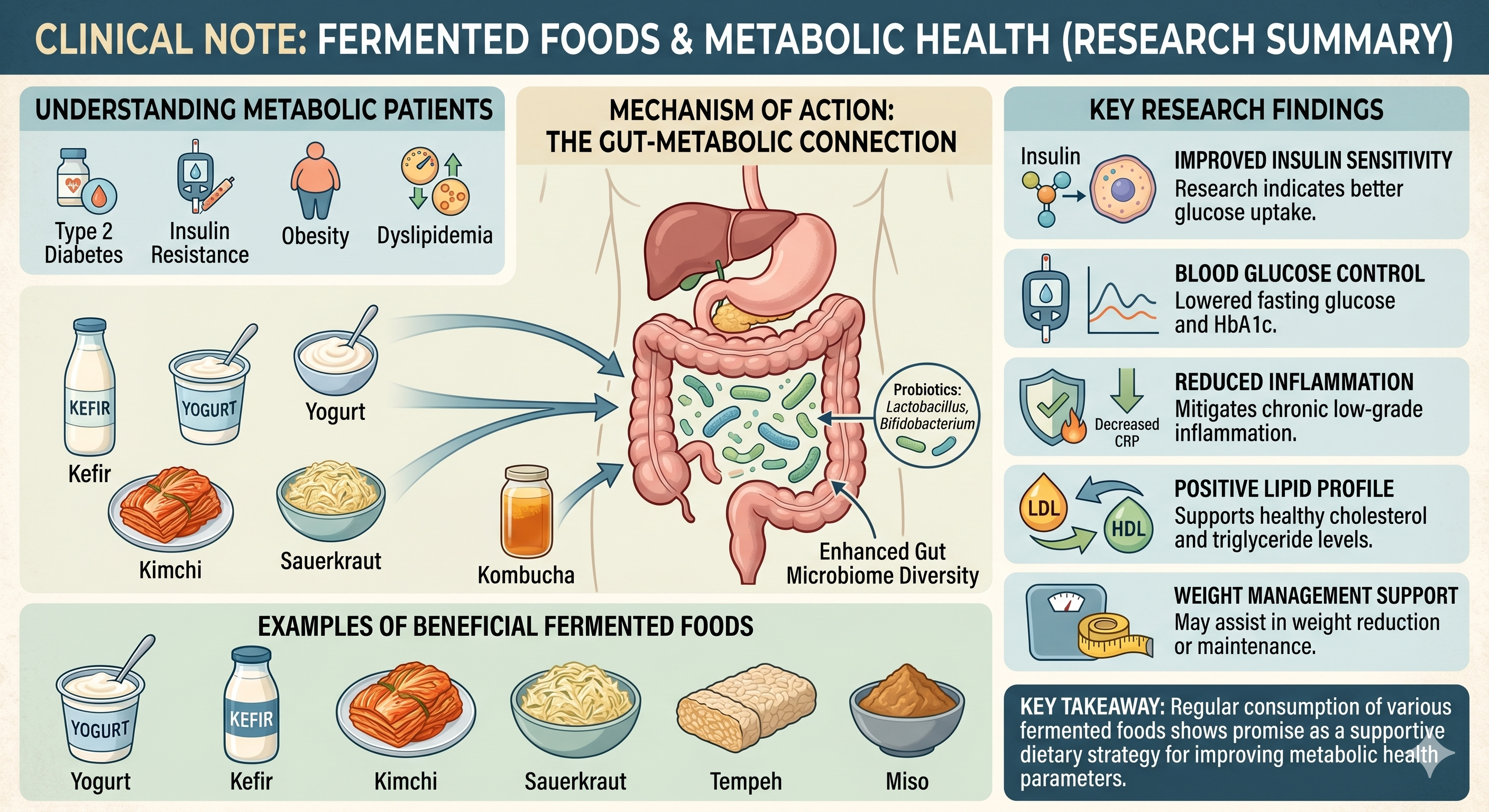
A CLINICAL NOTE ON FERMENTED FOOD FOR METABOLIC PATIENTS: WHAT THE RESEARCH SHOWS
For endocrinologists, gastroenterologists and integrative medicine practitioners — a summary of current evidence on fermented food and gut microbiome intervention for metabolic health.
GRASA Team
March 21, 2026
This post is written for healthcare practitioners and for patients who prefer to read the evidence before adopting dietary changes. We have summarised the current state of clinical research on fermented food and gut microbiome intervention for the metabolic conditions most prevalent in urban North India: insulin resistance, PCOS, non-alcoholic fatty liver disease (NAFLD), and hypothyroidism.
The Gut Microbiome as a Metabolic Organ
The gut microbiome — the approximately 38 trillion microorganisms colonising the human intestinal tract — is now understood to function as a metabolic organ in its own right. Its composition and diversity are associated with insulin sensitivity, body weight regulation, cardiovascular risk, and immune modulation in ways that are mechanistically understood and clinically significant.
Key peer-reviewed findings:
- Qin et al. (Nature, 2012): Individuals with Type 2 diabetes showed significantly reduced gut microbiome diversity and lower levels of butyrate-producing bacteria compared to healthy controls.
- Sonnenburg & Sonnenburg (Cell, 2021): A high-fermented-food diet increased microbiome diversity and decreased 19 inflammatory proteins over 17 weeks in a randomised controlled trial.
- Tremellen & Pearce (Medical Hypotheses, 2012): Proposed the DOGMA (Dysbiosis Of Gut Microbiota) hypothesis, linking gut dysbiosis to PCOS pathophysiology through LPS-mediated androgen dysregulation.
- Leaky gut and NAFLD: Multiple studies have established that intestinal permeability — driven by gut dysbiosis — increases portal endotoxin exposure to the liver, driving hepatic inflammation in NAFLD.
The Case for Dietary Fermented Food Over Probiotic Supplements
While probiotic supplements have clinical evidence in specific conditions, dietary fermented food appears to offer broader microbiome benefit for several reasons:
- Dietary fermented food introduces a more diverse array of bacterial strains compared to standardised single or multi-strain supplements.
- The food matrix (grain, dairy) provides prebiotic substrate simultaneously — feeding existing gut bacteria while introducing new ones.
- Adherence is higher for dietary change than supplement protocols — particularly in South Asian populations where food culture is central to identity and habit.
GRASA's Clinical Positioning
GRASA produces slow-fermented (18-24 hour) sourdough bread and fermented atta using live Lactobacillus Gut Correction cultures. The products are designed as daily staple replacements — not supplements — for patients managing insulin resistance, PCOS, hypothyroidism, and NAFLD in the Delhi NCR urban context.
We are currently building a practitioner onboarding programme in Delhi NCR. If you are an endocrinologist, gastroenterologist, gynaecologist, or integrative medicine practitioner interested in incorporating GRASA into your dietary recommendations, we would welcome a clinical conversation.
For a complete clinical brief including ingredients, fermentation process documentation, and patient protocol, contact GRASA at grasamillets.com or WhatsApp.
Found this helpful? Share it with your network.
Related Visuals

Related Articles
Share this Article
Explore GRASA
Fermented atta and sourdough bread crafted for gut health and metabolic wellness.
Shop NowOr WhatsApp: +91 9870263399
Explore More Articles
GRASA Recognised as India's Emerging Health Tech & Nutrition Innovation Startup of the Year — Rashtriya Ratna Samman 2026
GRASA Millets & Foods Pvt Ltd — India's first food-led metabolic recovery system built on fermented millets — has been awarded the Emerging Health Tech & Nutrition Innovation Startup of the Year at the Rashtriya Ratna Samman 2026.
Read More →Millets vs Wheat: Which Is Better for Digestion?
If you often feel bloated, sluggish, or heavy after meals, the problem might not be how much you eat — it could be what you eat.
Read More →Best Foods for Blood Sugar Control in India
India is now the diabetes capital of the world. Over 100 million Indians live with diabetes, and an estimated 136 million are in the 'pre-diabetic' zone — at risk but not yet diagnosed.
Read More →Jowar vs Bajra vs Ragi: What's the Difference?
Walk into any health store or browse any nutrition website today and you'll see millets everywhere. But 'millets' is actually an umbrella term for a large family of ancient grains...
Read More →